Why Bright Kids Struggle With Maths
(And the One Thing That Actually Fixes It)
Does your child count on their fingers, shuts down during maths time, or says
"I'm just not a maths person" - the problem isn't their intelligence. It's something much simpler (and fixable).
THE PATTERN YOU'VE PROBABLY NOTICED
Your child sits down for maths.
Within 60 seconds, you can see it: the tension, the avoidance, the resistance.
Not because they're lazy. Not because they're "bad at maths."
Because they genuinely don't understand what they're doing.
And you've already tried to fix this:
Kumon? 6 months, €900. Still counting on fingers.
Private tutor? €80/hour, 3 months. Slight improvement, then plateaued.
Khan Academy? They watched the videos, did the practice... still confused.
Easier workbooks? Just made them feel more behind.
So what's actually going on here?
THE HIDDEN REASON NOTHING HAS WORKED
Here's what every single one of those programmes has in common:
They teach your child WHAT to do. Not WHY it works.
Let me show you exactly what I mean.
Your child learns: "To find 7 × 8, the answer is 56."
They drill it. Practise it. Memorise it.
But do they understand what multiplication actually IS?
Do they know WHY 7 × 8 equals 56? What it means? How it connects to addition? Why the order doesn't matter?
No.
They just know: "When I see 7 × 8, I say 56."
This is called procedural learning. And it's why smart kids struggle.
Because the moment the problem looks different - maybe it's 8 × 7 instead, or a word problem, or they're tired and can't remember - they're lost.
They don't have understanding. They have memorisation.
And memorisation without understanding is like building a house on sand.
The first time pressure hits, the whole thing collapses.
THE BREAKTHROUGH: CONCEPTUAL LEARNING CHANGES EVERYTHING
Here's what researchers at Harvard discovered (and what we've proven with over 400 homeschooling families):
When children understand the CONCEPT behind the maths - not just the procedure - three things happen:
1. Learning accelerates - because they can apply principles, not just repeat steps
2. Confidence rebuilds - because they can feel themselves actually understanding
3. Maths becomes logical - not mysterious, not scary, just... logical
This is called conceptual learning.
And it's the exact opposite of what Kumon, most tutors, and traditional workbooks do.
It's also why kids who "just don't get maths" can suddenly make 12-18 months of progress in 8-12 weeks.
Not because we're magic. Because we're teaching them the way their brain actually learns.
HOW THIS WORKS IN PRACTICE
Instead of drilling "7 × 8 = 56" until they memorise it...
We show them that multiplication means "groups of."
7 × 8 means "7 groups of 8" or "8 groups of 7."
We use visual games where they can SEE this. Manipulate it. Discover it.
Suddenly, multiplication isn't random numbers to memorise.
It's a concept they understand. A tool they can use. Something that makes sense.
And once they understand multiplication as a concept? The facts become easy to remember. Because they're not random - they're logical.
This is the difference between:
Knowing the answer (procedural)
Understanding why that's the answer (conceptual)
And that second one? That's what builds real mathematical thinking.
WHAT PARENTS SEE WHEN UNDERSTANDING CLICKS
"Week 3: She correctly solved a problem she'd never seen before, then explained to me WHY her answer was right. First time in 18 months of tutoring that's happened."
— Jennifer M., homeschool mum
"No crying for 6 weeks straight. That alone is worth it. But he's also jumped from mid-Year 2 to mid-Year 4 level in 10 weeks."
— Patricia K., mum to 8-year-old
"After €2,400 on tutors with minimal progress, we saw more improvement in 2 months here than the previous year combined. He went from 'I hate maths' to 'can I do another level?'"
— Marcus T., homeschool dad
"The look on her face when she said 'OH! That's why we carry the 1!' - I actually cried. She UNDERSTOOD. Not memorised. Understood."
— Sarah L., mum of 2
THE MATHIA ZORBITS METHOD
Here's exactly how we build conceptual understanding:
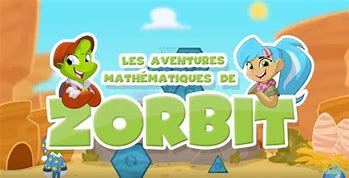
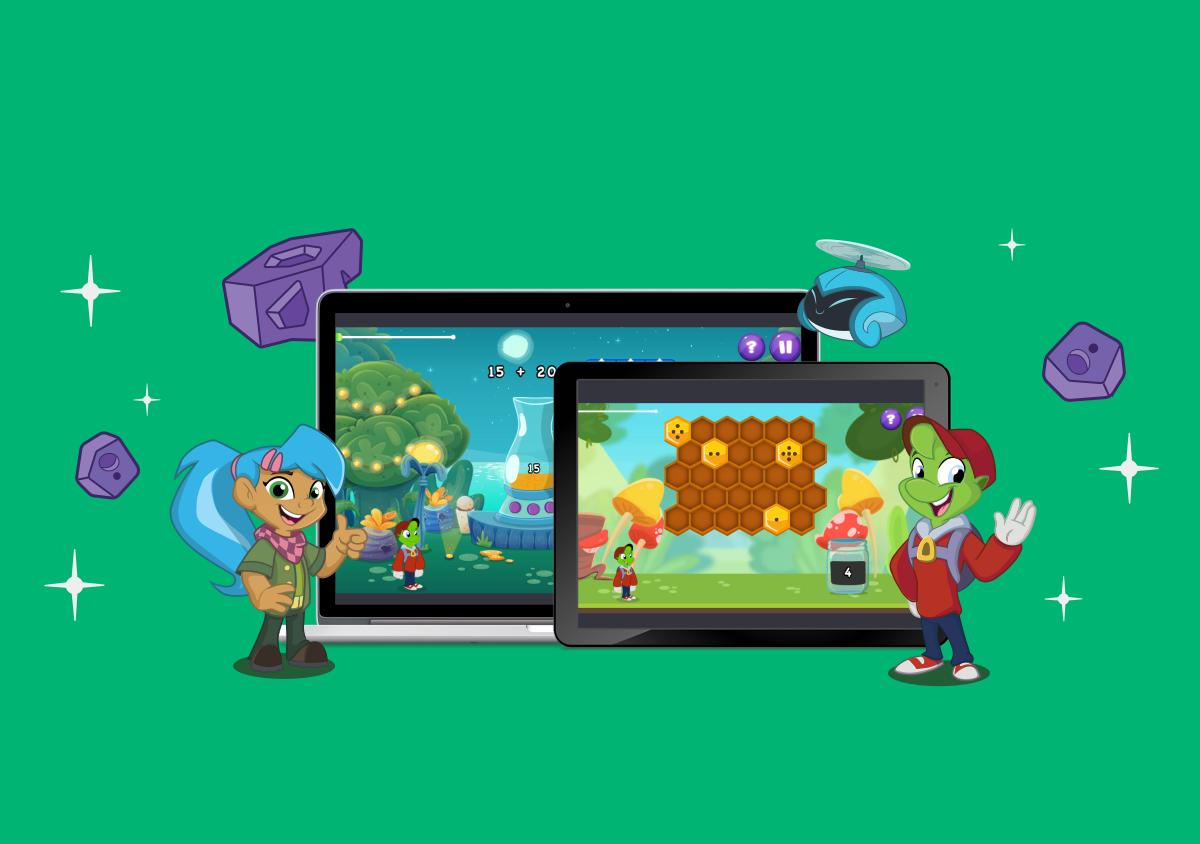
STEP 1: Interactive Games, Not Worksheets
Kids learn through exploration and discovery, not repetition and drill.
Our games let them manipulate numbers, see patterns, test theories - all whilst building genuine comprehension.
STEP 2: Concepts First, Operations Second
Before we teach the multiplication table, we teach what multiplication means.
Before we teach long division, we teach what division represents.
Understanding the concept makes learning the operation 10x easier.
STEP 3: Progressive Mastery
Each game builds on the last. As understanding deepens, challenges increase.
Your child isn't just getting right answers - they're developing mathematical thinking.


STEP 4: Parent Dashboard
You can see exactly what they're learning, where they're excelling, and what concepts they've mastered.
No guessing. No hoping. Clear visibility into their progress.
WHO THIS TRANSFORMS
This works especially well for:
✓ Kids in years K-5 who are "behind" and need to catch up
✓ Bright children who've decided "I'm not a maths person"
✓ Students who memorise steps but can't explain WHY
✓ Families where tutors haven't produced lasting results
✓ Homeschoolers looking for concept-based learning
✓ Children who shut down when maths "looks different"
This won't be right if:
✗ Your child is already thriving with conceptual understanding
✗ You just want faster memorisation of maths facts
✗ You're expecting overnight transformation (real learning takes 6-12 weeks to show clearly)
RESEARCH-BACKED APPROACH


The neuroscience is clear: children learn maths best when they understand concepts, not when they just memorise steps.
Our programme is built on this foundation.Our programme is built on this foundation.
WHAT YOU GET
MATHIA ZORBITS MONTHLY SUBSCRIPTION includes:
Complete Interactive Games Library (K-5) - concept-building games that engage without overwhelming
Structured Learning Pathway - progressive modules that build understanding systematically
Adaptive Challenges - difficulty adjusts as your child's understanding grows
Parent Progress Dashboard - see exactly what they're mastering and where they need support
Ongoing Updates - new games and content added regularly
Email Support - questions answered within 24 hours
Total Value: Comparable programmes charge €150-300/month.
Private tutors run €80-120/hour.
Your Investment: €27/month
Save 55% on our normal price of €49 per month
Or save an additional 40% with an annual payment: €197/year (works out to €32.45/month)
Cancel anytime. No long-term commitment required.
OUR GUARANTEE
Try Mathia Zorbits for 30 days.
If you don't see your child:
Understanding concepts they previously struggled with
Showing less resistance to maths work
Having more "I get it!" moments
Making measurable progress in comprehension
Email us. We'll refund every penny. No questions, no hassle.
We can make this guarantee because conceptual learning works. When kids understand WHY, learning accelerates.The only question is whether you'll give it a chance to work for your child.
THE REAL COST OF WAITING
Here's what most parents don't realise:
Every month your child believes "I'm not good at maths," that belief gets harder to reverse.
Because it's not just about maths anymore.
When a 7-year-old decides "I can't do this, something's wrong with me," that belief spreads. To reading. To writing. To any new challenge.They start shutting down before they even try.
Right now, you're in a critical window.
Your child hasn't given up completely yet. They're frustrated, yes. Discouraged, sure. But they haven't fully internalised "I'm not smart enough."
That window doesn't stay open forever.
The longer you wait, the harder it gets to rebuild their confidence. The more they fall behind. The more that belief becomes their identity.
Six months from now, you'll be in one of two places:
Place 1: Still struggling. More tears. More resistance. Bigger gaps. And a child who's now even more convinced they "just can't do maths."
Place 2: Watching your child explain WHY their answer is right. Seeing them choose maths activities. Hearing "Can I do another one?" instead of "Do I have to?"
The difference between those two futures? The decision you make in the next 48 hours.
TWO PATHS FROM HERE
PATH A:
Keep trying the same approaches that haven't worked.
Maybe buy another workbook.
Maybe try a different tutor.
Maybe hope something eventually clicks.
Watch your child struggle through another week. Another month. Another year.
You know where that path leads. You've been walking it.
PATH B:
Try the approach that's helped 400+ homeschooling families see real, measurable progress.
The approach backed by Harvard research and cognitive neuroscience.
The one that builds understanding instead of memorisation.
Give your child 60 days to experience what learning feels like when it actually makes sense.
If it doesn't work, you get your money back. If it does work, you get your confident, curious child back.
HOW TO GET STARTED
STEP 1: Click the button below to start your 30-day trial
STEP 2: Create your account (takes 2 minutes)
STEP 3: Your child starts with our assessment game (helps us meet them where they are)
STEP 4: Watch their understanding grow over the next 8-12 weeks
START YOUR 30-DAY TRIAL - €27/month
Save 55% on the normal price of €49 per month
Cancel anytime. 30-day money-back guarantee.
We typically respond within 2 hours during business hours.
ONE LAST THING
Your child isn't broken.
They're not "bad at maths."
They're not lazy or unmotivated or incapable.
They just haven't been taught in a way that builds understanding.
Every child can learn maths when it's taught conceptually instead of procedurally.
When they understand WHY instead of just WHAT.
When it makes sense instead of feeling like magic tricks they're supposed to memorise.
You've already spent €1,500-3,000 on approaches that didn't work.
Give conceptual learning 30 days.
If it doesn't work, you're out €27 and you get it back anyway.
If it does work?
You get to watch your child rediscover what you've known all along:
They ARE smart. They CAN learn. They just needed the right approach
START YOUR 30-DAY TRIAL NOW
30-day money-back guarantee.
Cancel anytime.
Just send an email to [email protected]
P.S. - The belief "I'm not good at maths" becomes harder to reverse with each passing month.
If you're seeing signs of that mindset taking hold, the best time to address it was last month. The second best time is today.
P.P.S. - Still not sure? Email us at [email protected] with your specific situation.
We'll give you an honest assessment of whether Mathia Zorbits is right for your child. No sales pitch, just straight advice.
P.P.P.S. - Remember: You have 30 days to try this completely risk-free.
If your child doesn't show measurable improvement in understanding and confidence, we refund every penny. The only way you lose is by not trying.